
Holidays in Cape Town Made Easy: Your Guide to a Stress-Free Stay
Cape Town is one of the most exciting destinations in the world. Between beaches, mountains, and vineyards, there is no shortage of things to do. But to really enjoy your holidays in Cape Town, you should know a few practical tips to make your stay easy, safe, and stress-free.
Stay Easy at the Beach
Cape Town’s beaches are among the most beautiful in the world, but the ocean here is powerful and requires caution. Currents can be strong, and you might encounter local marine life such as jellyfish or other potentially aggressive animals.
Beware of ripping currents
One of the main hazards for swimmers in Cape Town is the presence of rip currents. These narrow, fast-moving channels of water form when waves break strongly onshore and the water flows back out to sea, often creating powerful streams that can quickly pull even strong swimmers away from the shore. Rip currents are not undertows, they do not drag people underwater, but they can cause exhaustion if one tries to swim against them. To avoid danger, swimmers should always choose beaches with lifeguards, where rip currents are usually flagged. If caught in a rip current, the safest strategy is to remain calm, float to conserve energy, and swim parallel to the shoreline until free from the current, then return to shore with the help of incoming waves. Find more detailed safety information on the NSRI’s official guidelines.

How to deal with jellyfish stings
In Cape Town both box jellyfish and Portuguese man o’ war occur. Both of them deliver a painful sting, but the South African box jellyfish (Carybdea murrayana) is not as lethal as the Australian species (Chironex fleckeri), and its sting can usually be treated more easily. Other species are also present in these waters, such as the compass jellyfish (Chrysaora hysoscella), which can cause painful stings, and the moon jellyfish (Aurelia aurita), which is generally harmless to humans. Swimmers may also occasionally encounter bluebottles (Physalia utriculus), closely related to the man o’ war, whose stings can be extremely painful but are rarely life-threatening
If a jellyfish stings you, one of the most effective remedies is rinsing the affected area with vinegar and immersing it in hot water. You can find more detailed medical guidance on jellyfish stings and treatments.
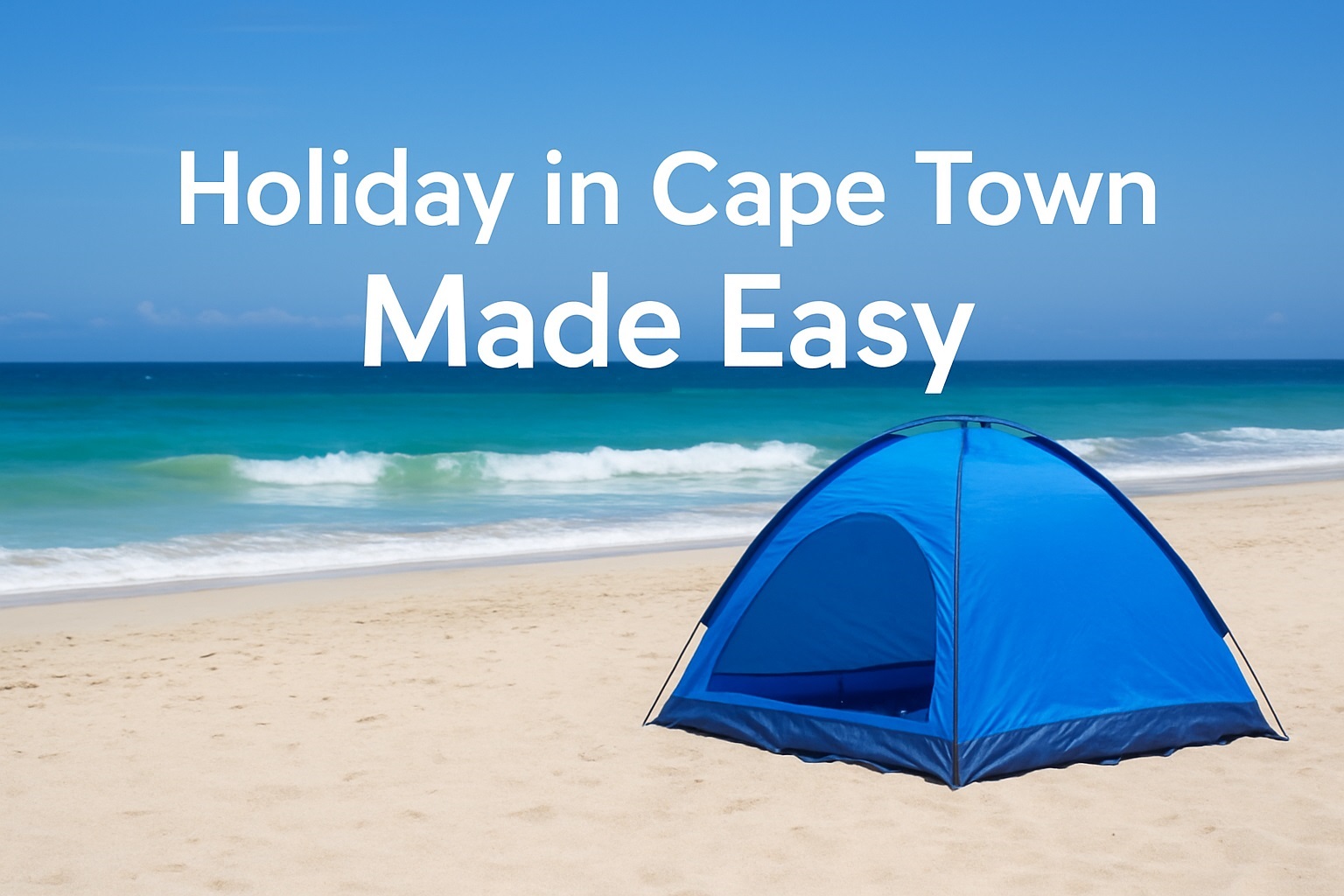
Another essential tip is to protect yourself from the sun. In summer, the African sun is strong and can cause burns quickly, so always use sunscreen and reapply after swimming. For extra comfort, bring a beach tent instead of an umbrella. Cape Town is famous for its strong winds, which can easily break or blow away umbrellas, while tents provide better shelter and stability.
Moving Easy and Safely
To move around Cape Town without stress, download apps like Uber and Bolt. Both services are widely used and offer affordable rides compared to European taxis. They are convenient, safe, and ideal if you don’t want the hassle of driving.
If you choose to rent a car, keep a few safety tips in mind. Do not leave valuables in plain sight, especially when stopping near areas that are known for smash-and-grab incidents, such as the N2 road near the airport. Always lock your car and remain aware of your surroundings.
EasyCapeTown Accommodation and Services
For a truly easy stay in Cape Town, accommodation plays a big role. Renting a flat in a safe and well-connected area can make your holiday smoother and more enjoyable. At EasyCapeTown, we provide comfortable apartments along with services designed to simplify your experience. From airport transfers to curated activity packages, we help you make the most out of your time in the Mother City without the stress of organizing everything yourself.
FAQ
Yes, Cape Town is generally safe if you take basic precautions. Stick to well-known areas, avoid walking alone at night, and use Uber or Bolt to move around conveniently and safely.
The summer months, from November to March, are the most popular thanks to warm weather and long beach days. However, spring (September–October) and autumn (April–May) are excellent for hiking and wine tasting with fewer crowds.
Yes, but you should always be mindful of strong rip currents and cold Atlantic waters. Choose beaches with lifeguards and look out for flags indicating safe swimming zones.
Bring light clothes for the summer, a jacket for windy evenings, comfortable shoes for exploring, and plenty of sunscreen. If you plan to spend time on the beach, a beach tent is a better option than an umbrella because of strong winds.
Uber and Bolt are affordable compared to European taxi fares, especially if you only plan short trips. If you want to explore beyond the city — such as the Cape Winelands or Cape Point — renting a car may be more convenient, but always avoid leaving valuables in plain sight.
Many visitors choose safe and well-connected neighborhoods like Big Bay, Sea Point, or the City Bowl. For a hassle-free stay, you can also consider EasyCapeTown accommodation packages, which combine secure apartments with curated local experiences.