Holiday in Cape Town: The Complete Planning Guide
When to go, where to stay, what to do, how to get around and what it actually costs. Everything you need to plan a Cape Town holiday — written by people who live here, not a travel agency.
Cape Town regularly tops lists of the world’s best cities to visit — and for good reason. The combination of mountain, ocean, wine farms, wildlife and one of the most dramatic coastlines on earth is hard to match. But a Cape Town holiday takes a bit of planning to get right. The city is bigger and more spread out than most visitors expect, the seasons make a real difference to what you can do, and where you stay shapes the entire experience.
This guide covers everything — written from the perspective of people who actually live here, not a travel agency scraping together blog content. No fluff, no filler.
When to Visit Cape Town
Cape Town has a Mediterranean climate — warm, dry summers and cool, wet winters. Unlike most of southern Africa, the rainy season here is winter (June to August), not summer. This is the single most important thing to know when planning your trip.
Where to Stay in Cape Town
Cape Town is a big city and where you base yourself makes a real difference to your holiday. The main areas to consider are the Atlantic Seaboard (Sea Point, Camps Bay, Green Point, Big Bay, Bloubergstrand), the City Bowl (CBD, De Waterkant, Bo-Kaap), the Southern Suburbs (Constantia, Newlands), and the Winelands (Stellenbosch, Franschhoek).
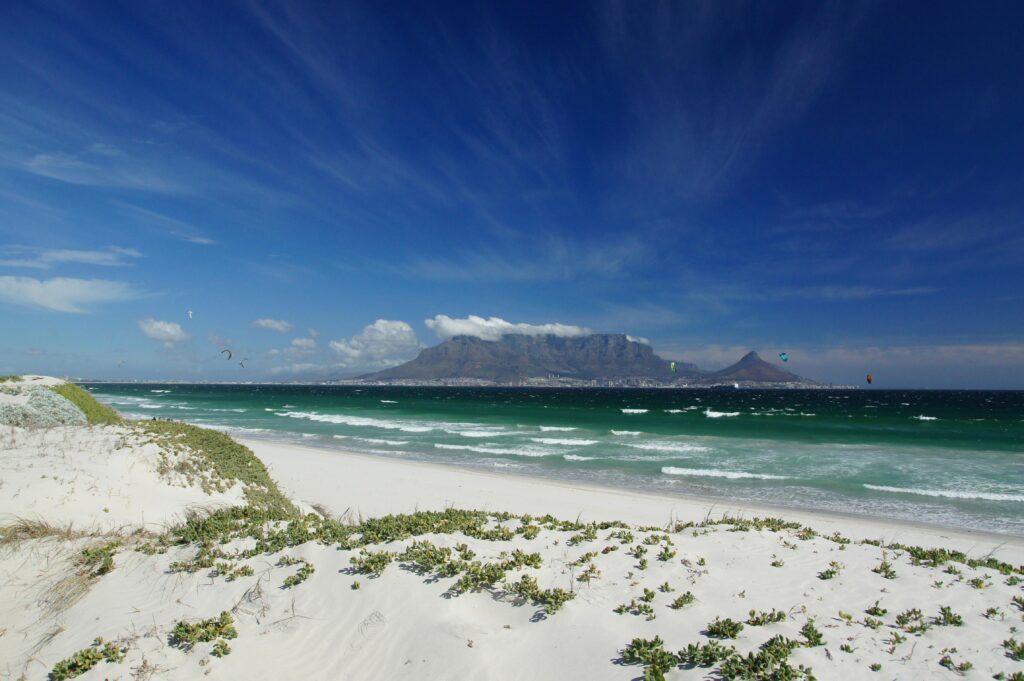
For most visitors, the Atlantic Seaboard is the sweet spot — beach access, great restaurants, and the mountain always in view. Big Bay and Bloubergstrand offer everything Sea Point and Camps Bay do at significantly better value, with more space and a quieter, more relaxed atmosphere. Read our full Big Bay & Bloubergstrand area guide →
Things to Do in Cape Town
Cape Town has enough to fill two weeks without repeating yourself. Here are the highlights — roughly in order of how often visitors say they were the best part of their trip.
-
Table MountainTake the cable car or hike up on foot. Both are worth doing if you have the time. Book the cable car online in peak season and always check the wind conditions before you commit to a hike.30 min from Big Bay
-
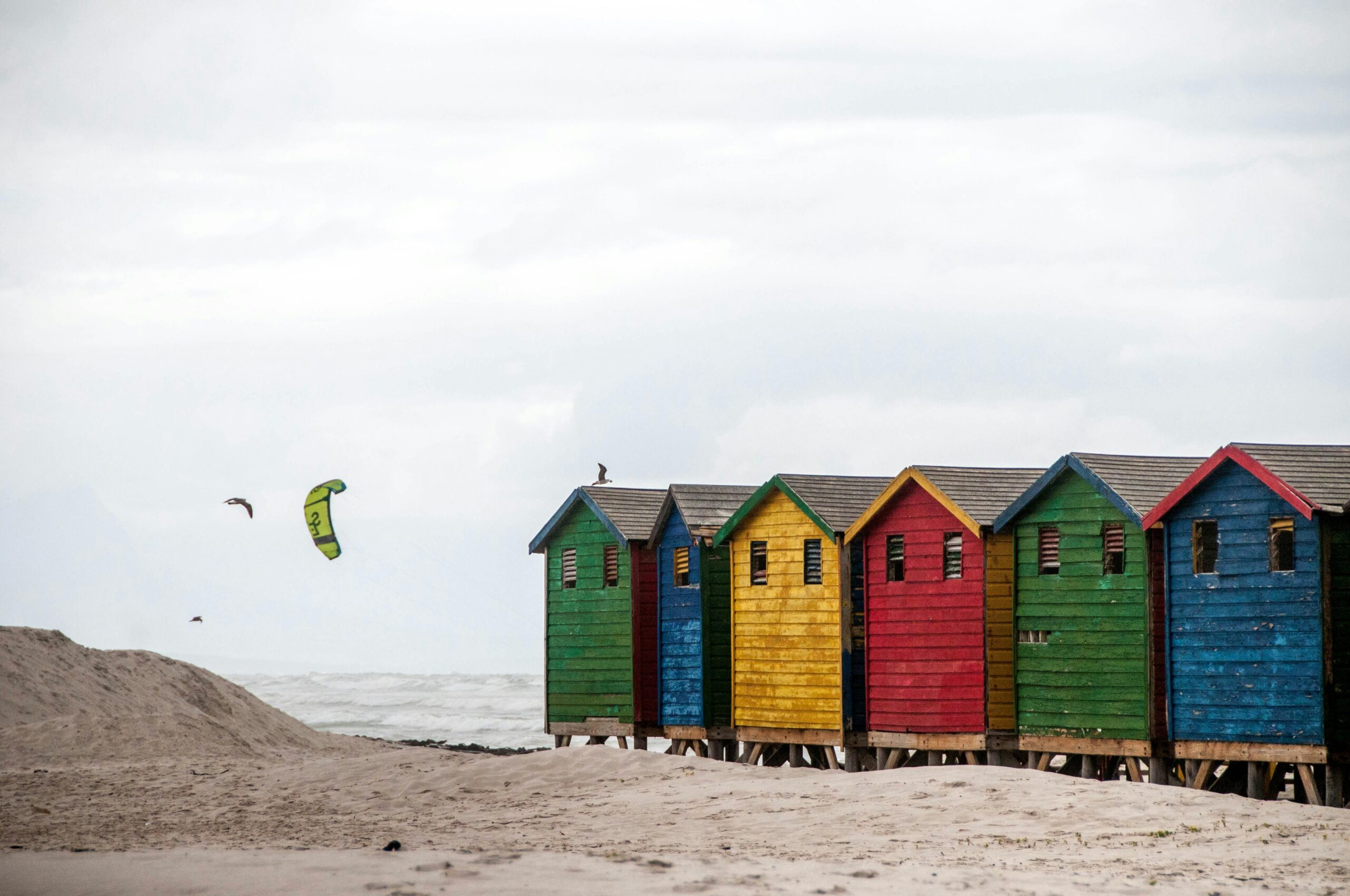
Kite-Surfing at Big BayWorld-class conditions from November to March. If you have never tried it, lessons are available right on the beach. Even if you are just watching from the shore, it is genuinely impressive.On your doorstep
-
V&A WaterfrontShopping, restaurants, the Two Oceans Aquarium and boat trips to Robben Island. Give it half a day. A full day if you are doing Robben Island, which we recommend booking in advance.25 min drive
-
Boulders Beach PenguinsAfrican penguins at very close range. One of those things that sounds touristy but genuinely delights everyone who goes. Get there early to avoid the midday crowds.75 min drive
-
Durbanville Wine ValleyMost visitors head straight to Stellenbosch and miss this one entirely. The Durbanville wine valley is just 20 minutes from Big Bay, far less crowded, and produces outstanding Sauvignon Blanc. Do not overlook it.20 min drive
-
Chapman’s Peak and Cape PointSet aside a full day for this one. Drive Chapman’s Peak, visit Cape Point, stop at Boulders Beach on the way back. It is one of the great coastal drives anywhere in the world and most people say it was the highlight of their trip.75 min drive
-
Bo-KaapCape Town’s historic Cape Malay quarter with its brightly coloured houses and excellent curry. An hour or two on foot is enough. Go in the morning when the light is good for photos and the streets are quieter.25 min drive
-
Whale WatchingSouthern right whales visit the Western Cape coast from July to November. Hermanus, about 90 minutes from Cape Town, is one of the best places in the world to watch them from land. Worth building a day trip around if you are visiting in season.Seasonal · Jul to Nov
Day Trips from Cape Town
Cape Town makes an exceptional base for day trips — within two hours you can reach some of the most varied and spectacular scenery in the world.
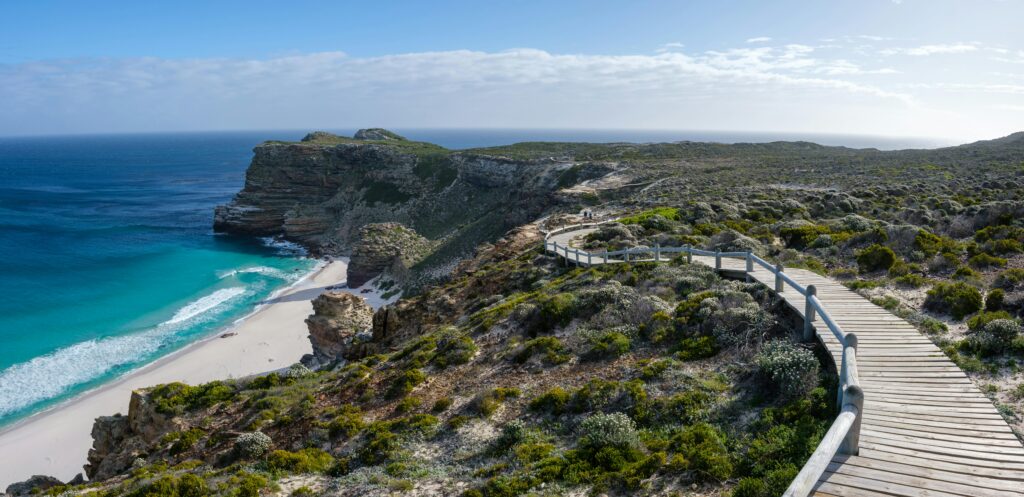
Cape Peninsula — Full Day
The classic Cape Town day trip. Drive Chapman’s Peak (one of the world’s great coastal roads), continue to Cape Point and the Cape of Good Hope, stop at Boulders Beach for the penguins, and head back up through Simonstown and Fish Hoek. Allow a full day — it’s about 150km but you’ll want to stop often.
Stellenbosch & Franschhoek Winelands — Full Day
South Africa’s premier wine region is about 50 minutes from Big Bay. Both towns are beautiful in their own right — Stellenbosch is livelier and more varied, Franschhoek is smaller and more refined. If you’re choosing one, Franschhoek has the edge for food.
Durbanville Wine Valley — Half Day
Often overlooked in favour of Stellenbosch, the Durbanville wine valley is just 20 minutes from our Big Bay apartment and produces outstanding Sauvignon Blanc and Pinotage. Far fewer tourists, better value, and you’re home in time for a braai. Durbaville Wine Farms guide →
Hermanus — Full Day
About 90 minutes from Cape Town, Hermanus is the best place in the world for land-based whale watching between July and November. The town itself is pleasant — good restaurants along the cliff path, a lively market on Saturdays.
How Much Does a Cape Town Holiday Cost?
Cape Town is significantly cheaper than most equivalent European or UK destinations. The Rand’s exchange rate means your money goes further than you might expect. Here’s a realistic daily budget breakdown for different travel styles.
Self-catering makes a meaningful difference to the daily total — cooking breakfast and the occasional dinner in the apartment rather than eating out every meal can cut your food spend by 30–40% over a week. More on why self-catering beats a hotel in Cape Town →
Getting Around Cape Town
Cape Town is not a walkable city in the way that European cities are. The distances between areas are significant, and while Uber works well and is affordable, a hire car gives you the most freedom — especially if you’re planning day trips.
Uber & Bolt
Both apps work well in Cape Town and are the easiest option for getting around the city without your own car. Prices are low by European standards — a trip from Big Bay to the Waterfront costs around R150–R200 depending on traffic. Use Uber for airport transfers rather than metered taxis.
Hiring a Car
Worth doing if you’re staying more than 4–5 nights and plan to do day trips. The Cape Peninsula, Winelands and Hermanus all require a car. Cape Town has all major rental companies at the airport. An important note for UK visitors — South Africans drive on the left, same as the UK, so the adjustment is minimal.
MyCiTi Bus
Cape Town’s bus rapid transit system connects the CBD, Sea Point, the Waterfront and the Airport. Useful for specific routes, not comprehensive enough to rely on entirely.
Is Cape Town Safe for Tourists?
This is the question most international visitors ask, and it deserves an honest answer rather than either dismissing concerns or catastrophising. Cape Town has real safety challenges. Crime exists, and it’s higher in some areas than others. But the tourist-facing parts of the city are generally safe when you follow straightforward guidelines, and millions of visitors have entirely trouble-free trips every year.
- Tourist areas like the Waterfront, Atlantic Seaboard and City Bowl are well-policed and generally safe during the day and in the evening.
- Big Bay and Bloubergstrand are residential, quiet and considered among the safer areas of Greater Cape Town.
- Uber and Bolt are safer than metered taxis and easy to track on your phone.
- Restaurant and shopping areas feel normal and relaxed in the evenings, particularly on the Atlantic Seaboard.
- Do not walk alone at night in unfamiliar areas or the CBD after dark.
- Never leave valuables visible in a parked car, anywhere in the city.
- Avoid the Cape Flats townships unless you are on an organised tour with a reputable operator.
- Use common sense with phones and cameras in busy public spaces.
The honest summary: Cape Town rewards sensible behaviour and punishes carelessness. If you apply the same awareness you’d use in any major city, you’ll almost certainly have no issues. Read our full safety guide for Cape Town visitors →
Practical Tips Before You Go
Visas
South Africa is visa-free for UK and EU passport holders for stays up to 90 days. You’ll need a return ticket and proof of accommodation. Make sure your passport is valid for at least 30 days beyond your departure date and has at least two blank pages.
Currency
The South African Rand (ZAR). Cards are accepted almost everywhere, but carry some cash for smaller purchases and tips. ATMs are widely available. Use bank ATMs in shopping malls rather than standalone machines, it’s safer and better. Since drawing money still imply a hefty charge (R50 for most of international transactions) it’s way better to pay with a card or a scan to pay system (Zapper or Snapscan). Notify your bank before travel to avoid cards being blocked. Read more about how to pay in cape Town →
Load Shedding
South Africa experiences scheduled power cuts, known as load shedding, where the electricity grid is shut down in rotating blocks across different areas for 2–4 hours at a time. It’s an ongoing issue, though the situation has improved significantly in 2024–2025. Most restaurants, shopping centres and accommodation providers have backup generators or inverters. Currently in 2026 loadhsedding issues are at the bare minimum and power interruptions are experienced only during manteinance of the electric grid.
SIM Cards
Buying a local SIM at the airport is straightforward and cheap. Vodacom and MTN are the most reliable networks. Data is affordable and 4G coverage is good in tourist areas. This is much more practical than paying roaming charges.
Health
No vaccinations are required for Cape Town (different for other parts of South Africa). Tap water is safe to drink. Travel insurance is strongly recommended: private medical care is good but expensive.
Tipping
Standard restaurant tip is 10–15%. Petrol attendants (South Africa has no self-service petrol), car guards, and hotel porters all expect small tips of R5–R20. It’s a meaningful part of their income.
The Bottom Line
Cape Town is worth every bit of the planning
It’s one of the world’s great cities — genuinely. The combination of mountain, ocean, wine country and extraordinary food within 90 minutes of each other is rare. Plan the basics (when to go, where to stay, which day trips), book accommodation early for peak season, and let the rest take care of itself.
Cape Town holiday?
Both apartments are available to book directly with us. No Airbnb fees, no Booking.com surcharge. WhatsApp us for availability or book straight from the property pages.